
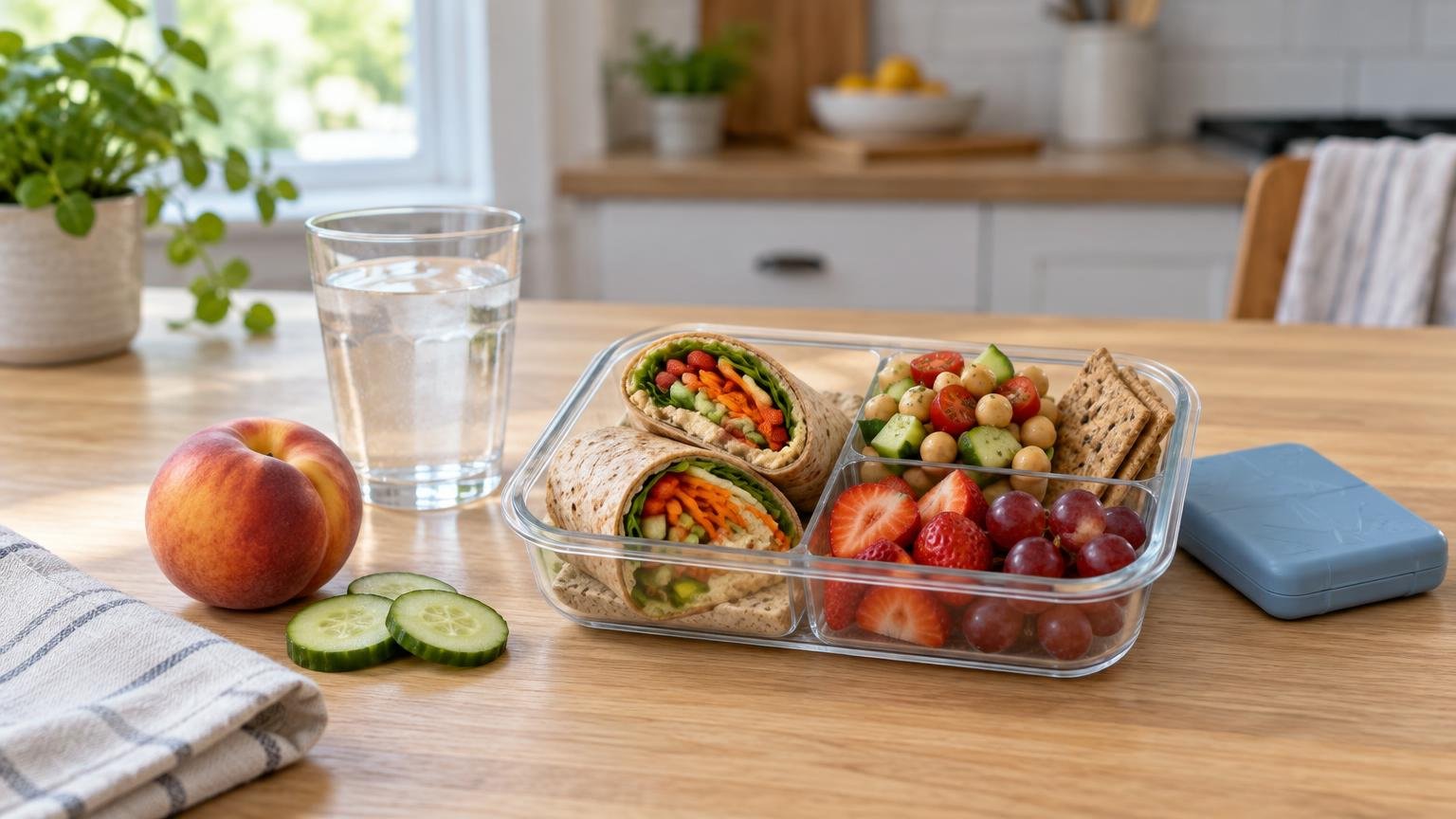
No-Cook Lunch Ideas for Hot Days and Busy Workweeks
A good no-cook lunch does not need a complicated recipe. Choose one filling protein, add a fruit or vegetable, include a grain or another satisfying carbohydrate, and finish with a sauce, spread, or crunchy extra. That simple structure can become a wrap, snack plate, grain bowl, sandwich, or salad in about five minutes.
The easiest approach is to keep several interchangeable ingredients on hand rather than assigning yourself five different lunch recipes every week. Hummus can go into a wrap on Monday and onto a snack plate on Wednesday. A can of beans can become a salad, sandwich filling, or grain bowl. Last night’s cooked quinoa can support lunch without requiring any lunchtime cooking.
TLDR: Use a four-part no-cook lunch formula
- Protein: beans, lentils, tuna, salmon, yogurt, hummus, cheese, eggs, tofu, nuts, seeds, or leftover cooked meat.
- Produce: leafy greens, chopped vegetables, slaw, fruit, or a mixture of whatever is already available.
- Satisfying base: whole-grain bread, a wrap, crackers, pita, cooked grains, or potatoes left from another meal.
- Flavor and texture: dressing, mustard, pesto, salsa, olives, pickles, seeds, nuts, or something crunchy.
Not every lunch needs every food group. The broader goal is variety across meals and days. Beans, lentils, seafood, nuts, seeds, soy foods, and eggs all fall within the Protein Foods group in USDA MyPlate’s protein guidance, while beans and lentils can also count as vegetables.
A mix-and-match lunch builder
Use this table as a starting point rather than a strict meal plan. Pick one item from each column, then adjust the amount to your appetite and schedule.
| Protein or filling | Produce | Base | Flavor or crunch |
|---|---|---|---|
| Hummus | Cucumber and peppers | Whole-grain pita | Olives and za’atar |
| Tuna or salmon | Tomatoes and greens | Whole-grain wrap | Mustard and pickles |
| White beans or chickpeas | Slaw or spinach | Bread or crackers | Pesto or vinaigrette |
| Greek or soy yogurt | Berries or sliced peach | Oats or whole-grain cereal | Nuts or seeds |
| Leftover chicken or tofu | Carrots and greens | Cooked grain | Dressing and crispy onions |
| Cheese and nuts | Apple or grapes | Whole-grain crackers | Mustard or chutney |
Whole-grain bread, wraps, crackers, and previously cooked grains are practical options when you want more staying power. USDA guidance recommends making at least half of grain choices whole grains, but lunch does not have to become a scavenger hunt for a perfect label. Use the option that tastes good, fits your budget, and makes the meal easy to repeat.
Sandwiches and wraps that go beyond deli meat
Sandwiches and wraps are efficient because the container is edible and the ingredient combinations are forgiving. Keep wet ingredients away from the bread until close to lunchtime when possible, or place lettuce, cheese, or another relatively dry ingredient against the bread as a barrier.
1. Hummus crunch wrap
Spread hummus over a whole-grain wrap and add shredded carrots, cucumber, bell pepper, greens, and pumpkin seeds. A little feta, hot sauce, or pickled onion adds more flavor. Roll tightly and cut in half.
2. White bean sandwich
Lightly mash drained white beans with pesto or vinaigrette. Add spinach, tomato, and sliced olives to bread or a roll. Chickpeas work too, and the filling can be made creamy with yogurt, tahini, or a small amount of mayonnaise.
3. Tuna and white bean wrap
Combine canned tuna with rinsed white beans, lemon juice, olive oil, pepper, and chopped herbs. Add greens and roll it into a wrap. The beans stretch the tuna while contributing a soft, satisfying texture.
4. Mediterranean salmon pita
Mix canned salmon with yogurt, lemon, dill, or parsley. Spoon it into pita with cucumber and tomato. Pack the filling separately if the pita will sit for several hours.
5. Peanut butter, fruit, and seed sandwich
Pair peanut or another nut butter with banana, thin apple slices, berries, or a modest layer of jam. Sprinkle on chia, hemp, or sunflower seeds for texture. Use a seed-based spread when packing for a nut-free setting.
No-cook bowls and salads that feel like a meal
A pile of greens with a few tomatoes may technically be a salad, but it often makes a disappointing lunch. Build a more substantial bowl with protein, a hearty base, and a flavorful dressing.
6. Chickpea Greek-style salad
Toss chickpeas with cucumber, tomatoes, peppers, olives, feta, and vinaigrette. Eat it alone, tuck it into pita, or serve it over greens. It keeps its texture better than many leafy salads, making it helpful for advance preparation.
7. Black bean salsa bowl
Combine black beans, corn, salsa, avocado, shredded cabbage, and leftover rice or quinoa. Finish with lime and crushed tortilla chips. For a ready-made variation, this quinoa and black bean salad can be prepared ahead and portioned for lunch.
8. Shortcut lentil salad
Start with canned or packaged cooked lentils. Add chopped vegetables, greens, vinaigrette, and cheese or toasted seeds. Lentils also pair well with grated carrots, raisins, curry powder, and a yogurt-based dressing.
9. Leftover grain and vegetable bowl
Use cold quinoa, barley, farro, brown rice, or another cooked grain from dinner. Add beans or leftover cooked protein, any vegetables that need using, and a dressing with enough flavor to pull everything together. This is less a recipe than a reliable refrigerator-clearing method.
10. Bagged salad upgrade
A salad kit is a legitimate convenience food, but it may need more substance for lunch. Add chickpeas, canned fish, leftover chicken, tofu, nuts, seeds, or a boiled egg. Include bread, crackers, fruit, or a cooked grain if the salad alone is unlikely to carry you through the afternoon.
Snack plates and yogurt lunches
A snack-style lunch works particularly well when you prefer variety to one large dish. It is also a practical way to accommodate household members who like different foods without preparing separate recipes.
11. Hummus lunch box
Pack hummus with pita wedges or crackers, carrots, cucumber, peppers, grapes, and a few olives. Add cheese, roasted chickpeas, or a boiled egg when you want a more substantial box.
12. Cheese, fruit, and cracker plate
Pair cheese with whole-grain crackers, apple or pear slices, snap peas, and nuts or seeds. Mustard, pickles, or chutney can make a familiar combination feel more like a composed lunch.
13. Savory yogurt bowl
Top plain Greek yogurt or unsweetened fortified soy yogurt with cucumber, tomatoes, herbs, olive oil, and seeds. Eat it with pita or crackers. Yogurt and calcium-fortified soy yogurt are both Dairy Group options in MyPlate guidance.
14. Fruit and yogurt crunch bowl
Combine yogurt with berries, peaches, banana, or chopped apple. Add oats, whole-grain cereal, nuts, or seeds shortly before eating so they stay crisp. If you need a larger lunch, pair the bowl with toast, vegetables and hummus, or a small sandwich.
15. Portable pantry plate
Pack an unopened single-serving fish pouch or can, whole fruit, crackers, and shelf-stable extras such as nut butter, olives, or dried fruit. Open the fish only when you are ready to eat. This arrangement is useful when refrigerator access is uncertain, though leftovers from an opened package still require safe cold storage.
Make busy-week lunches easier without making five recipes
Choose two proteins, two produce options, one or two bases, and a flavorful extra for the week. For example, buy hummus and chickpeas, cucumber and bagged slaw, pita and crackers, plus olives or a favorite dressing. Those ingredients can become wraps, salads, and snack plates without tasting exactly the same every day.
If advance planning helps, spend ten minutes deciding which lunches must travel and which can be assembled at home. The broader principles in this practical meal-planning approach can help you reduce daily decisions without locking every meal into a rigid schedule.
- Wash and dry sturdy produce such as grapes, carrots, peppers, and cucumbers.
- Drain and rinse beans, then refrigerate them in a covered container.
- Mix one bean or fish filling for the next day or two rather than the entire week.
- Cook extra grains at dinner specifically for cold bowls later.
- Keep bread and crunchy toppings separate from wet fillings.
- Place a lunch bag and clean cold packs where they will be easy to grab.
Cooked meat or poultry leftovers and prepared tuna, chicken, egg, or macaroni salads generally have a refrigerated storage window of three to four days when kept at 40°F or below. Labeling the preparation date can prevent an optimistic Thursday guess about something made the previous weekend.
Food safety for no-cook packed lunches
No-cook does not mean no refrigeration. Yogurt, cheese, prepared tuna or salmon mixtures, cooked grains, cut produce, eggs, and meat leftovers are perishable. USDA recommends carrying perishable lunches in an insulated soft-sided bag with at least two cold sources, positioned above and below the food. See the agency’s complete packed-lunch safety guidance for packing details.
Perishable food should not remain at room temperature for more than two hours. When the temperature is above 90°F, that limit drops to one hour. This matters in hot cars, at outdoor events, and during commutes where a lunch bag may sit in direct sun.
If a refrigerator is available, put the lunch away when you arrive. Leave an insulated bag open inside the refrigerator so cold air can circulate around the food. After eating, discard perishable leftovers if you cannot keep them properly chilled for the return trip.
Wash hands with soap and water for 20 seconds before preparation, and rinse fresh fruits and vegetables under running water. Keep ready-to-eat lunch ingredients away from raw meat, poultry, seafood, and eggs during storage and preparation. The CDC’s food-safety basics offer additional prevention steps.
Whole fruit and vegetables, bread, crackers, peanut butter, jelly, mustard, pickles, and unopened canned fish are among the options USDA identifies as not requiring a cold source. Once fish is opened or made into a salad, however, it becomes a perishable lunch component and needs to stay cold.
A note about tuna and salmon
Canned tuna and salmon are convenient ways to add seafood to lunch, but fish choice matters during pregnancy and breastfeeding. FDA and EPA advice places salmon and canned light tuna among the “Best Choices” for people who are pregnant, might become pregnant, or are breastfeeding. Albacore or white tuna is a “Good Choice” with a lower recommended frequency. Review the current FDA and EPA fish guidance for serving recommendations and advice for children.
Frequently asked questions
What can I pack for lunch without a refrigerator?
Build around shelf-stable foods such as whole fruit, sturdy whole vegetables, bread, crackers, nut or seed butter, unopened canned or pouched fish, and unopened shelf-stable items. Check individual labels because some products require refrigeration. If you want yogurt, cheese, prepared fish, cooked grains, or leftovers, use an insulated bag with adequate cold sources.
How do I keep a wrap or sandwich from getting soggy?
Pat vegetables dry, use thicker spreads, and keep watery tomatoes or dressing separate until eating. Put lettuce or cheese next to the bread as a barrier. For especially wet fillings, carry the filling in a small container and assemble lunch when you are ready.
Are canned beans ready to eat?
Most canned beans are fully cooked and can be eaten without additional cooking. Drain and rinse them unless the recipe benefits from the canning liquid. After opening, transfer unused beans to a covered container and refrigerate them.
How can I make a no-cook lunch more filling?
Start by checking whether it includes a meaningful protein source and enough total food for your needs. Add beans, fish, hummus, yogurt, cheese, tofu, eggs, nuts, seeds, whole-grain bread, crackers, cooked grains, fruit, or avocado. A small green salad may be refreshing, but a salad with chickpeas, grain, dressing, and crunchy toppings is more likely to function as lunch.
Can I use dinner leftovers in a no-cook lunch?
Yes. Previously cooked grains, vegetables, chicken, fish, tofu, or potatoes can become a cold bowl, salad, or wrap. Refrigerate leftovers promptly, keep them at 40°F or below, and use appropriate cold storage when transporting them.
Start with one repeatable lunch
Do not try to overhaul every weekday lunch at once. Pick one combination that already sounds good—perhaps a hummus wrap, chickpea salad, tuna and bean bowl, or yogurt plate—and buy enough ingredients to make it twice. The win is not producing five photogenic containers on Sunday. It is making tomorrow’s lunch easy enough that you will actually pack it.
References
- MyPlate.gov | Protein Foods Group – One of the Five Food Groups
- Make Half Your Grains Whole Grains.
- MyPlate.gov | Dairy Group – One of the Five Food Groups
- Cold Food Storage Chart | FoodSafety.gov
- Keeping "Bag" Lunches Safe | Food Safety and Inspection Service
- Pack It Safe, Pack It Smart: Back-to-School Lunchbox Packing Essentials | Food Safety and Inspection Service
- Preventing Food Poisoning | Food Safety | CDC
- Questions & Answers from the FDA/EPA Advice about Eating Fish for Those Who Might Become or Are Pregnant or Breastfeeding and Children Ages 1 to 11 Years | FDA