Active Weekend Ideas for Families Who Do Not Want Another Scheduled Sport
TLDR
The best active family weekend ideas are simple enough to begin without much planning: take a color walk, bike to a nearby destination, visit a playground, swim, garden, play a yard game, or explore a museum with a scavenger hunt. Choose one activity that fits the family’s available time, energy, abilities, budget, and weather. Keep the goal focused on shared enjoyment rather than distance, speed, calories, or winning.
An active weekend does not need to look like a workout—or require another registration, uniform, and fixed schedule. Everyday movement such as walking, biking, swimming, gardening, yardwork, and playground games all counts as physical activity. The most sustainable choice is usually the one your household can do with relatively little friction and would willingly repeat.
Children ages 3–5 should be active throughout the day, while children and teens ages 6–17 are advised to get at least 60 minutes of moderate-to-vigorous activity each day. That movement can be accumulated across shorter periods, and guidance emphasizes varied, age-appropriate, enjoyable activities. A family outing can contribute without becoming a mandatory 60-minute training session.
Choose active family weekend ideas by time and energy
Instead of asking everyone to agree on the perfect outing, start with two practical questions: How much time do we actually have, and how much energy do people have today? Then offer two or three suitable choices rather than an unlimited list.
| Time available | Lower-key option | More energetic option |
|---|---|---|
| About 15 minutes | Walk to the mailbox, water plants, or take an I-spy stroll | Play catch, dance to a few songs, or build a quick obstacle course |
| 30–60 minutes | Visit a playground, walk through a museum, garden, or complete an errand on foot | Take a bike or scooter loop, swim, hike a short trail, or play a yard game |
| A half day | Explore a museum, zoo, botanical garden, or accessible nature area with rest breaks | Combine a picnic with a longer walk, family ride, pool visit, or several park games |
Short choices are not consolation prizes. A 15-minute activity may be far more repeatable than an ambitious outing that requires extensive packing and leaves everyone tired or frustrated. This approach also fits the broader idea that everyday movement counts even when it is not organized as a formal workout.
Make an ordinary walk feel like an activity
“Let’s go for a walk” may not generate much enthusiasm. A small purpose can transform the same route into a shared game. Let one person choose the direction at each corner, search for objects in every color of the rainbow, count dogs or delivery vehicles, photograph interesting textures, or make a list of neighborhood sounds.
A collaborative scavenger hunt works well because family members can search together instead of competing. Look for something round, something older than the adults, three kinds of leaves, a house number containing a chosen digit, or an object that starts with each family member’s initial. For teens, try a photo theme, podcast walk, geocaching activity where appropriate, or a trip with a real destination such as a café or library.
Parks provide easy variations. Walk one loop, stop at the playground, toss a ball, or create a simple circuit using available features: walk to a tree, balance along a painted line, circle a bench, and return to the starting point. Keep climbing and balancing tasks appropriate for each participant and follow posted park rules.
Use bikes, scooters, and wheels without making it a race
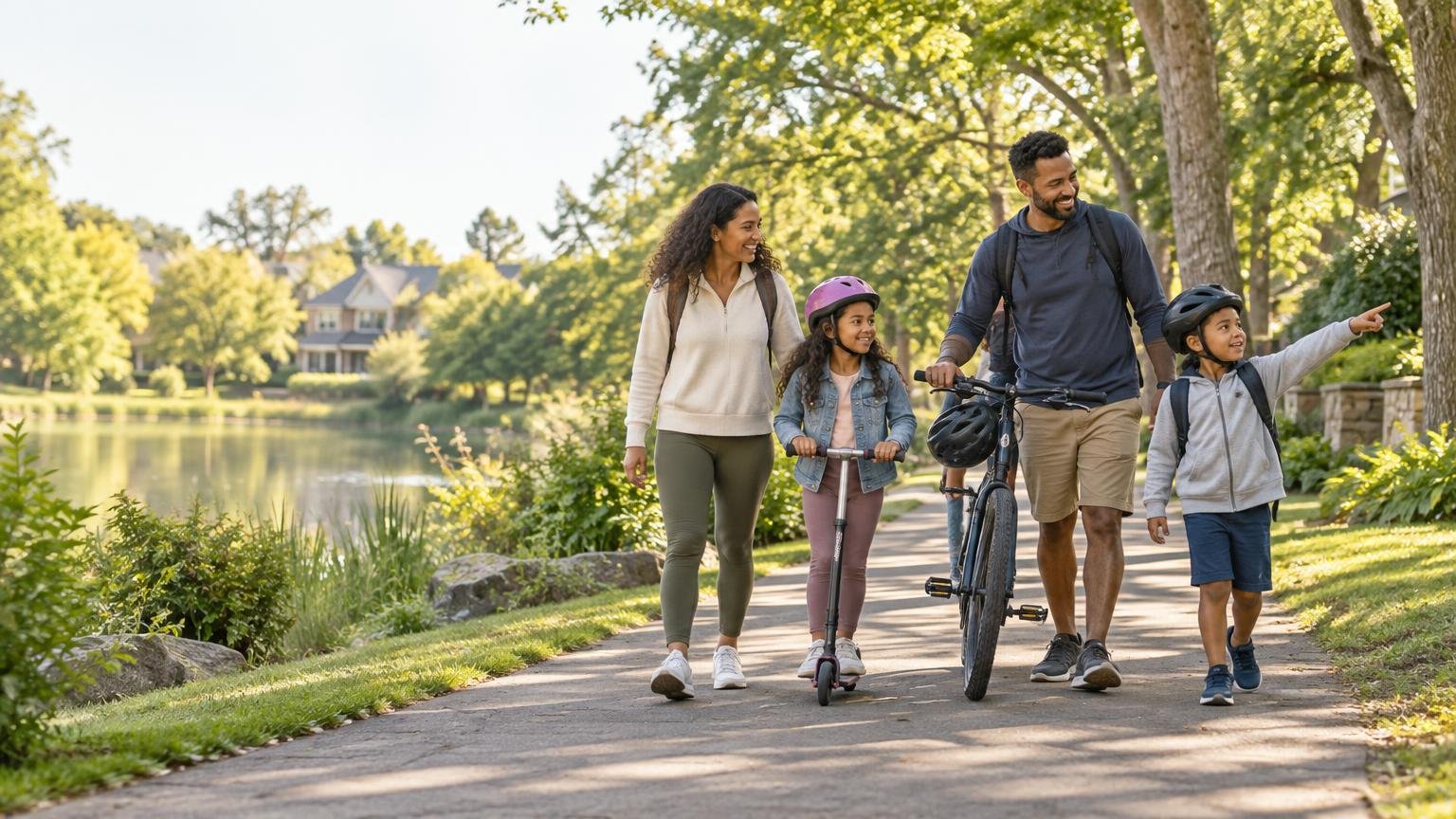
A family ride can be a neighborhood loop, a trip to a playground, or a ride-and-walk outing where people switch modes. Younger children might use balance bikes or scooters while an adult walks. A wheelchair user might choose a smooth accessible route while others walk or ride alongside them.
Before leaving, match the route to the least confident participant. Check traffic exposure, crossings, surface condition, hills, distance, daylight, and opportunities to turn back. Make sure bikes and mobility equipment are functioning properly, and use correctly fitted safety equipment appropriate to the activity. The outing succeeds when everyone returns comfortably—not when the family covers a particular distance.
Cool off with water-based movement
Open swim, water walking, splash-pad play, and simple pool games can work across a wide range of energy levels. Try retrieving sinking toys in an appropriate depth, moving like different animals through shallow water, or taking turns inventing movements for everyone to copy.
Water requires undivided safety attention. Children need close, constant supervision in and around water, even when lifeguards are present or a child has taken swimming lessons. CDC drowning-prevention guidance recommends assigning an adult to supervise closely rather than assuming someone else is watching. Water wings and flotation toys do not replace supervision or a properly fitted U.S. Coast Guard-approved life jacket when one is appropriate. Follow the facility’s rules and stay within each person’s swimming ability.
Turn the yard or home into a flexible play space
You do not need regulation equipment or elaborate rules. A balloon can become indoor volleyball. Chalk can create a hop-and-turn path. Cups or empty boxes can mark an obstacle course. Rolled socks can be tossed into a laundry basket. Outside, try catch, Frisbee, follow-the-leader, bubbles, or a cooperative challenge to keep a ball moving for as many passes as possible.
Gardening and household projects can also become shared movement when they are presented as a meaningful family task rather than disguised exercise. Children can dig small holes, carry light watering cans, gather leaves, wash outdoor toys, sweep a patio, or help clean the car. Assign age-appropriate jobs and rotate roles so one person is not left with all the heavy or repetitive work.
A useful formula is ten minutes of necessary work followed by ten minutes of playful choice. Plant herbs, then play catch. Rake leaves, then jump or roll through a safe pile. Walk to return a library book, then stop at the playground. Combining purposes makes movement easier to fit into a full weekend.
Try indoor movement when outside is not appealing
Rain, extreme temperatures, smoke, poor air quality, or early darkness can change the plan. Indoor options include dancing, balloon volleyball, hallway bowling with soft objects, an indoor pool, or a community-center walk. If your household has adequate space, set up stations such as marching, tossing socks into a basket, stepping over tape lines, and stretching or resting.
Museums, galleries, conservatories, and similar venues can add walking without making movement the sole purpose of the visit. Create exhibit bingo, search for five animals or colors, sketch a favorite object, or let each person choose one room for the group to explore. Check admission costs, opening hours, bag rules, accessibility, seating, sensory conditions, and restroom availability before leaving.
A museum visit should not become a step-count contest. The cultural experience is the main event; walking is simply part of the day. Build in seats, snacks where permitted, and time to look closely rather than rushing through every gallery.
Make errands part of the outing
A practical destination can remove the feeling that the family is moving merely for the sake of moving. If the route is feasible and safe, walk or roll to the library, mailbox, pharmacy, farmers market, playground, or a nearby shop. Give each person a role: carry the list, navigate, choose the return route, or spot a safe place for a break.
An errand outing does not need to be all-or-nothing. Drive partway and walk the final section, park once and visit several destinations, or have one adult meet the group at the endpoint. These hybrid options can help when distance, time, mobility, or carrying purchases would otherwise make the trip impractical.
Adapt the plan for mixed ages and abilities
Inclusive family movement does not require everyone to do the identical action. It means everyone has a meaningful way to participate. One person can walk while another rolls. A child can run between two adults who maintain a steadier pace. Someone who needs a seated role can keep score, blow bubbles, toss a ball, photograph scavenger-hunt finds, or choose the next clue.
- Choose routes with a short-loop option so people can stop without ending the entire outing.
- Identify seating, shade, restrooms, accessible parking, and suitable route surfaces in advance.
- Use time rather than distance as the shared boundary: explore for 20 minutes, then decide whether to continue.
- Favor cooperative games when differences in speed or skill make competition frustrating.
- Let people opt into a higher-energy version, such as jogging ahead and returning, without requiring everyone to match it.
- Ask what would make the activity comfortable instead of guessing what another person can do.
Conflict often drops when everyone gets a small piece of the decision. One person chooses the destination, another chooses the game, and another chooses the snack or music. If preferences remain far apart, use a two-part plan: a brief shared activity followed by separate choices.
Check weather, safety, and logistics before leaving
A two-minute check can prevent an easy outing from becoming difficult. Look at the forecast, air quality, daylight, route conditions, venue hours, admission requirements, and transportation. Bring water, necessary medications, weather-appropriate clothing, sun protection when needed, and any mobility or safety equipment the activity requires.
In hot conditions, move the outing to a cooler part of the day, choose shade or an indoor alternative, reduce the pace, and drink more water than usual. If someone feels faint or weak, stop the activity and get to a cool place. Cold, heavy rain, storms, smoke, and poor air quality may call for a shorter outing or an indoor plan rather than an effort to push through.
For trails, parks, bike routes, pools, and public venues, verify local conditions rather than assuming a destination will suit the group. Surface, grade, crowding, adaptive-equipment availability, water depth, and accessibility can vary substantially.
Frequently asked questions
What are the easiest active family activities with no special equipment?
Start with a neighborhood scavenger hunt, follow-the-leader walk, dance break, playground visit, gardening task, or sock-toss game. Choose something that can begin within ten minutes, because low setup is often more important than novelty.
How can we motivate children who do not want to go for a walk?
Give the walk a destination, game, or decision-making role. Let the child choose turns, bring a camera, look for a short list of objects, walk with a friend, or pair the trip with a library or playground visit. If resistance remains high, shorten the walk rather than turning it into a power struggle.
What can a family do in only 15 minutes?
Walk around the block, dance to three songs, water the garden, play catch, race against a timer while tidying outdoor toys, or create a quick chalk path. Stop at 15 minutes if that is what fits; continuing is optional.
How do we choose an activity when everyone wants something different?
Offer two realistic options and let family members vote, alternate who chooses each weekend, or combine two short activities. Agree in advance on a modest shared portion so nobody feels trapped in a long outing they did not choose.
Does walking around a museum count as physical activity?
It adds light movement and breaks up sitting, but the intensity and duration vary. Treat it as an enriching outing that includes movement, not as a guaranteed substitute for more energetic play. If everyone has energy afterward, add a short park stop or walk around the block.
Build a weekend tradition that can bend
Choose one idea that fits this weekend—not an idealized weekend with better weather, more time, and unlimited enthusiasm. Try it, notice what the family enjoyed, and adjust next time. A repeatable tradition could be as small as a Saturday library walk, Sunday yard game, monthly pool visit, or post-lunch scavenger hunt.
The goal is not to engineer a flawless active day. It is to make shared movement an ordinary, enjoyable option that belongs in family life. Start with 15 minutes, let different people shape the plan, and finish while the experience still feels good.
References
- Plan your week – Move Your Way | odphp.health.gov
- Child Activity: An Overview | Physical Activity Basics | CDC
- Help your kids get more physical activity – Move Your Way | odphp.health.gov
- Preventing Drowning | Drowning Prevention | CDC
- Summer Swim Safety | Drowning Prevention | CDC
- Heat and Athletes | Heat Health | CDC