
How to Build a Balanced Plate Without Counting Every Calorie
TLDR
A balanced plate without calorie counting can start with four flexible parts: vegetables or fruit, a protein food, a grain or starchy food, and a little fat, sauce, or other flavorful addition. A half-produce, quarter-protein, quarter-starch visual can be useful, but it is a starting point rather than a rule. Adjust the amounts for your hunger, activity, schedule, food preferences, culture, budget, and health needs.
Building a balanced plate without calorie counting does not require weighing rice, measuring dressing, or making every meal look identical. The practical goal is to combine enough variety and substance that the meal feels enjoyable and carries you reasonably well to the next opportunity to eat.
Federal dietary guidance supports varied eating patterns that include vegetables, fruits, grains, and protein foods while recognizing that individual food needs differ. The Dietary Guidelines for Americans provides the broader framework, but your everyday plate can be much simpler than a formal nutrition plan.
A balanced plate without calorie counting starts with four parts
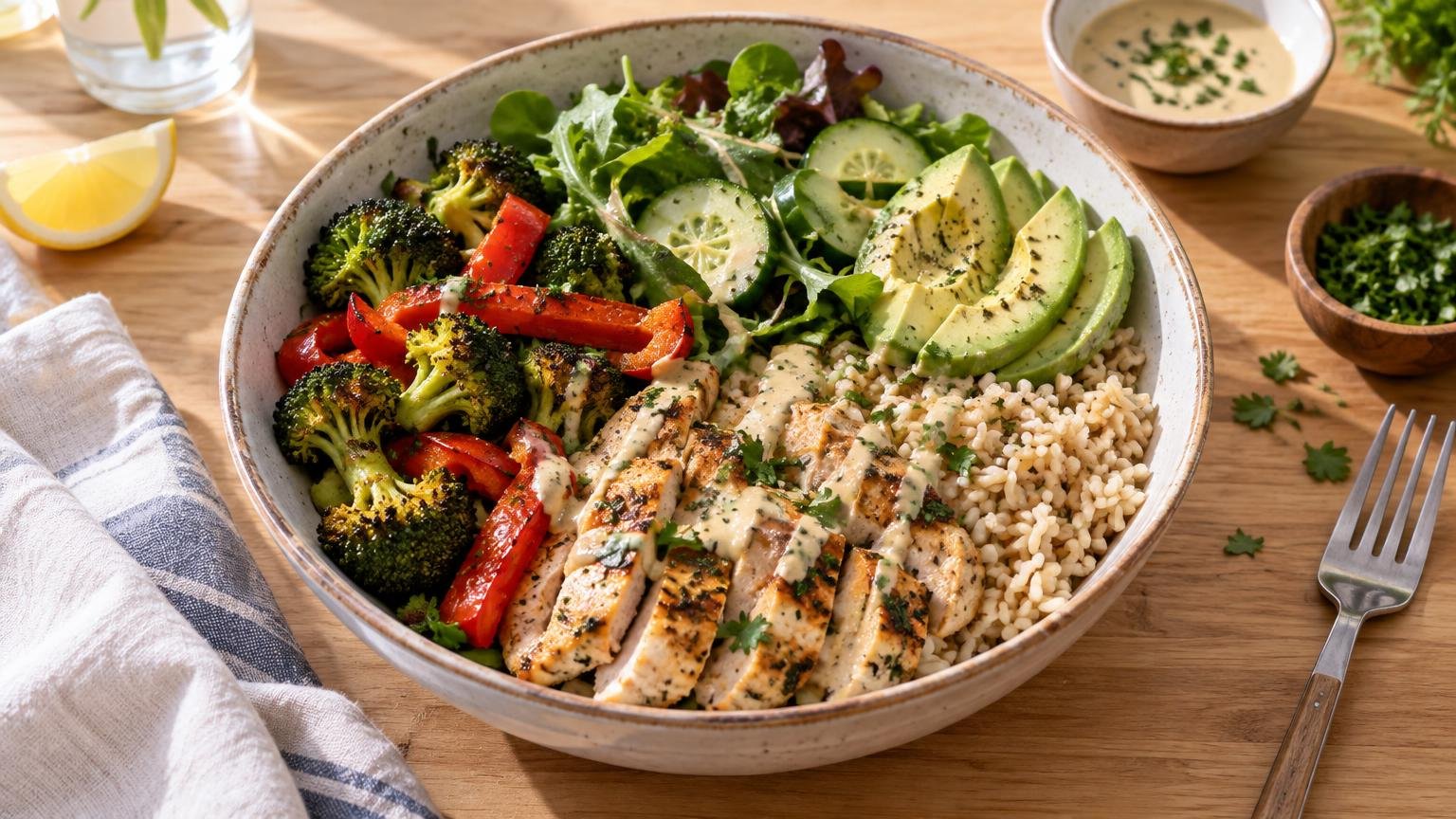
When you need a quick visual, picture roughly half the plate as vegetables and fruit, one quarter as a protein food, and one quarter as a grain or starchy food. Add fat, sauce, cheese, avocado, nuts, seeds, or another ingredient that contributes flavor and makes the meal feel complete.
Those proportions are not an individualized prescription. Some meals will need more starch or protein, while others will contain more produce. A sandwich, soup, curry, casserole, or pasta dish may not show distinct sections at all. The useful question is whether the main components are present somewhere in the meal, not whether they occupy perfect geometric spaces.
1. Start with vegetables or fruit
Produce can add color, flavor, texture, and variety. It also does not have to mean a large raw salad. Fresh, frozen, canned, dried, raw, and cooked vegetables can all contribute to a meal.
Choose the form that fits the day. Microwave frozen broccoli while rice cooks, add canned tomatoes to a bean dish, put bagged slaw in a wrap, serve an apple beside a sandwich, or stir berries into breakfast. If half a plate of produce feels unrealistic, begin with one available option and build from there.
2. Add a recognizable protein food
Protein choices include seafood, meat, poultry, eggs, beans, peas, lentils, nuts, seeds, and soy foods. Yogurt, milk, cheese, and suitable alternatives may also fit a meal according to your preferences and needs.
You do not need an elaborate centerpiece. Eggs at breakfast, chickpeas in a salad, tofu in a stir-fry, tuna in a sandwich, or leftover chicken in a grain bowl can all work. Including a clear protein source at many meals is a practical way to give the meal structure, but every eating occasion does not have to follow the same pattern.
3. Keep grains and starchy foods on the plate
Rice, potatoes, pasta, bread, oats, corn, noodles, tortillas, and other grains or starches can be part of a balanced meal. They do not need to be removed simply because you are no longer counting calories.
The amount can change with context. You might want more rice after a physically active day, more bread when the next meal is several hours away, or a smaller amount of pasta when the dish also contains beans and plenty of other ingredients. Beans and lentils can contribute both protein and carbohydrate, so they do not need to be forced into only one section of the plate.
4. Include flavor and fat
A meal may look nutritionally organized but still feel unfinished if it is dry or bland. Olive oil, pesto, tahini, salad dressing, avocado, nuts, seeds, cheese, coconut milk, mayonnaise, butter, salsa, or another favorite sauce can supply flavor and texture.
Treat these ingredients as part of the meal rather than mistakes that need to be compensated for. You can choose an amount that suits the food and your preferences without measuring every teaspoon.
How to choose portions without tracking
A serving size and a portion are not the same thing. A serving size is a standardized amount used on a Nutrition Facts label. A portion is the amount you choose to eat at a particular time. The label can provide useful context, but it does not automatically dictate how much belongs on your plate.
If you are learning what different quantities look like, occasional measuring or familiar visual comparisons can help. The Academy of Nutrition and Dietetics presents these as learning tools, not something required at every meal. You might measure your usual cereal bowl once, for example, and then return to pouring it normally with a better sense of the bowl’s capacity.
A simple portion process is:
- Consider how hungry you are and how long it will be until you can eat again.
- Serve an amount that seems reasonable for that situation.
- Eat at a comfortable pace when circumstances allow.
- Pause partway through or near the end and notice hunger, fullness, and enjoyment.
- Have more if you are still hungry, or save what remains if you have had enough.
This is observation, not a test you can pass or fail. Research on mindful-eating interventions does not justify promising appetite control simply because someone pauses during a meal. A systematic review found reduced food intake in controlled settings but no statistically significant effect on appetite, so check-ins are best treated as optional information rather than a guaranteed strategy.
Adjust the plate to fit the day
Your first serving does not have to predict your needs perfectly. Start with more when hunger is strong, the meal follows substantial activity, or the next chance to eat is far away. Start with less when you are only mildly hungry, knowing that you can return for more.
Activity can change appetite and meal preferences, but ordinary movement does not need to become a calorie equation. It may be more useful to notice patterns across your week and support them with regular meals and snacks. For a similarly low-pressure approach, see ways to make everyday movement count without creating a workout plan.
Convenience and access matter too. Frozen vegetables, canned beans, rotisserie chicken, microwave rice, jarred sauce, bread, eggs, and pre-cut fruit can make this framework easier to use. A practical meal assembled in ten minutes still counts.
If planning reduces last-minute stress, choose a few components rather than scheduling every bite. Prepare one grain, one protein, a couple of produce options, and a sauce that can become bowls, wraps, salads, or quick dinners. The same idea can be folded into a broader meal-planning routine.
Five balanced meal examples
Rice bowl
Combine rice with roasted or frozen vegetables, chicken or tofu, and a sauce such as tahini dressing, teriyaki sauce, or chili crisp. Add more rice when you need a more substantial meal or extra vegetables when that sounds better.
Pasta dinner
Serve pasta with tomato sauce, spinach or roasted vegetables, and lentils, meatballs, chicken, or white beans. Finish it with Parmesan, olive oil, or pesto. The foods can be mixed together; they do not need separate plate sections.
Breakfast
Try oatmeal with milk or soy milk, fruit, and nuts, or eggs with toast and tomatoes. Breakfast does not require a special formula. It can use the same produce-protein-starch structure as lunch and dinner.
Sandwich plate
Make a turkey, tuna, egg, hummus, or tofu sandwich and add vegetables inside or on the side. Fruit, soup, or both can round out the meal. If one sandwich is not enough, add another half, yogurt, crackers, or a more substantial side.
No-cook meal
Pair canned chickpeas or tuna with bread or crackers, sliced vegetables or fruit, and hummus, cheese, olives, or dressing. This is especially useful when cooking capacity matters more than creating an ideal-looking plate.
Frequently asked questions
Do I need protein at every meal?
Not every meal or snack needs to be perfectly balanced. Including a protein food at many meals can make meal building easier, but look at the pattern of your day rather than treating one meal as a nutrition emergency.
What should I do if I am still hungry after eating?
Eat more. You could have another portion of the meal or add something easy, such as bread, fruit, yogurt, nuts, leftovers, or a snack. Persistent or major appetite changes, especially when accompanied by other symptoms, deserve a conversation with a healthcare professional.
How do I make a balanced vegetarian or vegan plate?
Choose a plant protein such as beans, lentils, tofu, tempeh, peas, nuts, or seeds; add vegetables or fruit and a grain or starchy food; then include a sauce or fat for flavor. A lentil curry with rice and vegetables or a tofu wrap with slaw and avocado are straightforward examples.
Does takeout have to match the plate visual?
No. Look for the components across the whole order. Pizza can be paired with salad or fruit; a burrito can contain beans, rice, vegetables, protein, and salsa in one package; and a curry can combine vegetables and protein over rice. You can also save part or add food based on your hunger.
Does every meal have to look balanced?
No. Meals vary, and nutrition patterns develop across days and weeks. One meal may be light on produce, while another contains plenty. The framework is most useful as a gentle prompt when deciding what to make, not as a standard for judging what you already ate.
Use the framework, then make it yours
At your next meal, try one small step: identify the produce, protein, and grain or starch, then add whatever flavor makes the food appealing. If a component is missing, decide whether adding it would make the meal more practical or enjoyable. If not, move on and look at the broader pattern.
A plate template is general education, not medical treatment. People managing diabetes, kidney disease, digestive conditions, food allergies, major appetite changes, or a history of disordered eating may need individualized help from a registered dietitian or another qualified clinician. For everyday meal building, however, flexibility is a strength: use the visual when it helps, adjust it when life calls for something different, and let one imperfect meal simply be one meal.